In the past few hours mosques have been attacked in Southern Somalia where gunmen are indiscriminately aiming Muslim congregations. In what appears to be a new level of bloodlettings, targeting mosques is undoubtedly a testimony to how sour the conflict in Somalia had gone.
The billion dollar question is, who will be safe in Somalia, where even Mosques have seen a sharp rise of attacks. It will indeed be a matter of wait and see.Read more
Monday, April 18, 2011


Saturday, April 16, 2011
Kenya’s evil hand spoils the broth in Azania
Azania has been created by the forces of evil, to destroy the efforts of innocent Somalis living and surviving in Gedo, Middle and Lower Juba regions. For now, these forces would want to see more mayhem and an exacerbation of the endless conflict in Somalia.
Does it help Kenya to extend its unyielding political interference to Somalia? The Sobbing Somali asks you to take part in its poll to show the unstoppable solidarity to safe the people of Jubaland.
Read More
Does it help Kenya to extend its unyielding political interference to Somalia? The Sobbing Somali asks you to take part in its poll to show the unstoppable solidarity to safe the people of Jubaland.
Read More
Thursday, March 31, 2011
The Sapping Strength of Al Shabaab
By Abdullahi Jamaa
(Adopted from Somalia Report)
It is apparent from the events of recent weeks that Somalia’s radical Islamist group, Al Shabaab, is losing strength and ground due to the recent Transitional Federal Government (TFG) offensive, casting doubt on their ability to continue to control much of southern Somalia.
Following recent intensified fighting, Al Shabaab lost strategic towns in the south and a number of its military bases in the capital of Mogadishu. The latest loss of the towns of Bulla Hawa and Luuq is a powerful testimony to the sapping strength of the Islamists, both militarily and ideologically.
Even as Al Shabaab consolidates its power in large swathes of the land in Somalia, there is a growing concern over whether the group can still hold the power of its strongholds given the rising military opposition from the authority of Sheikh Sharif, backed by the international community and supported by African Union (AU) peacekeepers.
Al Shabaab provides the only significant opposition to the fragile western-backed Somali government, but if the current emerging signals are anything to go by, the present military onslaught seems to be an acid test for the group that has vowed to rule Somalia under Islamic sharia law.
Read more
(Adopted from Somalia Report)
It is apparent from the events of recent weeks that Somalia’s radical Islamist group, Al Shabaab, is losing strength and ground due to the recent Transitional Federal Government (TFG) offensive, casting doubt on their ability to continue to control much of southern Somalia.
Following recent intensified fighting, Al Shabaab lost strategic towns in the south and a number of its military bases in the capital of Mogadishu. The latest loss of the towns of Bulla Hawa and Luuq is a powerful testimony to the sapping strength of the Islamists, both militarily and ideologically.
Even as Al Shabaab consolidates its power in large swathes of the land in Somalia, there is a growing concern over whether the group can still hold the power of its strongholds given the rising military opposition from the authority of Sheikh Sharif, backed by the international community and supported by African Union (AU) peacekeepers.
Al Shabaab provides the only significant opposition to the fragile western-backed Somali government, but if the current emerging signals are anything to go by, the present military onslaught seems to be an acid test for the group that has vowed to rule Somalia under Islamic sharia law.
Read more
The War On Piracy Hits a Dead End
By Abdullahi Jamaa(Adopted From Somaliareport)
Indonesian Bulk Cargo Carrier MV SINAR KUDUS is the latest victim of a rash of hijacking conducted by Somali pirates on the 16th of March. Hijacked approximately 320 nautical miles North East of the island of Socotra in the Somali Basin, the attack bears a transformed hallmark of the dreaded Somali pirates who are carrying out more brazen attacks than ever before.
The escalating raids on vessels voyaging along the Gulf of Aden, East Coast of Somalia, Southern region of the Red Sea, Bab-El-Mandeb strait and the East Coast of Oman remains an enigma that envelopes one of the most strategic waterways of the world.
It is indeed a problem of huge monumental proportion that had stunned world leaders, policy makers and pressure groups who hitherto finds themselves unable to draw a clear battle line and a better strategy to win the war on piracy.
And to contain the situation they have tried their level best but in vain, the International community left nothing to chance in dealing with the piracy issue for instance various states and international organizations are actively engaged in stopping piracy.
There are currently three navy missions in the Gulf of Aden: Operation Atlanta under the European Union Naval Force, the US led Combined Task Force 151 and NATO’s ‘Operation Ocean Shield”. These missions have been aided by the presence of warships belonging to China, Japan, Iran, India and Russia.
Despite the presence of about 20 warships comprising of the world’s most powerful navies, the trouble of piracy is still huge and its predicament is mind-boggling than it was a few years ago and before the naval operations have began. Merchant vessels have now been put to the expense of passing through an endangered waterway where Somali pirates prowl mercilessly.
Read more

Indonesian Bulk Cargo Carrier MV SINAR KUDUS is the latest victim of a rash of hijacking conducted by Somali pirates on the 16th of March. Hijacked approximately 320 nautical miles North East of the island of Socotra in the Somali Basin, the attack bears a transformed hallmark of the dreaded Somali pirates who are carrying out more brazen attacks than ever before.
The escalating raids on vessels voyaging along the Gulf of Aden, East Coast of Somalia, Southern region of the Red Sea, Bab-El-Mandeb strait and the East Coast of Oman remains an enigma that envelopes one of the most strategic waterways of the world.
It is indeed a problem of huge monumental proportion that had stunned world leaders, policy makers and pressure groups who hitherto finds themselves unable to draw a clear battle line and a better strategy to win the war on piracy.
And to contain the situation they have tried their level best but in vain, the International community left nothing to chance in dealing with the piracy issue for instance various states and international organizations are actively engaged in stopping piracy.
There are currently three navy missions in the Gulf of Aden: Operation Atlanta under the European Union Naval Force, the US led Combined Task Force 151 and NATO’s ‘Operation Ocean Shield”. These missions have been aided by the presence of warships belonging to China, Japan, Iran, India and Russia.
Despite the presence of about 20 warships comprising of the world’s most powerful navies, the trouble of piracy is still huge and its predicament is mind-boggling than it was a few years ago and before the naval operations have began. Merchant vessels have now been put to the expense of passing through an endangered waterway where Somali pirates prowl mercilessly.
Read more
Wednesday, March 9, 2011
Kenya accused of delaying piracy trials
Adopted from the Daily Nation
A Kenyan magistrate has accused the State of dragging an appeal on whether Kenya can try piracy suspects.
This had made it difficult for lower courts to expedite trials and address the concerns of suspects, Mombasa chief magistrate Rosemelle Mutoka said.
As a result, many cases have been adjourned indefinitely, awaiting the verdict of the Court of Appeal on the High Court ruling that the country does not have jurisdiction to try suspected Somali pirates.
Mr Justice Mohamed Ibrahim ruled last year that magistrates had no jurisdiction to try suspected Somali pirates charged under Section 69 (1) of the Penal Code.
By the time the ruling was made, there were seven cases involving 57 Somalis at different levels of trial.
Several others had been dispensed with, a dozen suspects found guilty and jailed.
Ms Mutoka said the seven cases had been stopped indefinitely following the appeal.
The magistrate asked why the State was not acting with the same zeal it applied to some cases that came from the magistrates’ courts to the High Court for revision.
A Kenyan magistrate has accused the State of dragging an appeal on whether Kenya can try piracy suspects.
This had made it difficult for lower courts to expedite trials and address the concerns of suspects, Mombasa chief magistrate Rosemelle Mutoka said.
As a result, many cases have been adjourned indefinitely, awaiting the verdict of the Court of Appeal on the High Court ruling that the country does not have jurisdiction to try suspected Somali pirates.
Mr Justice Mohamed Ibrahim ruled last year that magistrates had no jurisdiction to try suspected Somali pirates charged under Section 69 (1) of the Penal Code.
By the time the ruling was made, there were seven cases involving 57 Somalis at different levels of trial.
Several others had been dispensed with, a dozen suspects found guilty and jailed.
Ms Mutoka said the seven cases had been stopped indefinitely following the appeal.
The magistrate asked why the State was not acting with the same zeal it applied to some cases that came from the magistrates’ courts to the High Court for revision.
Wednesday, March 2, 2011
Somalia’s tribal media pulls the country yet to a dangerous abyss
Commentary by Abdullahi Jamaa
Somalia’s airwaves have been spoilt, much like the devastated environment where gun battles have left a great deal of destruction, the medium through which news and information reach the poor and helpless Somalis have been damaged to an alarming degree.
The proliferation of a formidable number of media outlets has not yet yielded to the insatiable demands of the conflict-hit population, instead the media developed to be a blood-sucking monster whose monstrosity spawned hatred and animosity that is spreading like a malevolent fire only to claim more death and destruction.
The unhinged press failed to transcend catastrophic human suffering and opted to blatantly diminish Somalia’s slim chances of emerging from the current conflict. From one end, troubled civilians endure the raging daily gun battles and from another unexpected end their hidden enemy-the media – intimately destroys the minds and ears of the listless and depressed audience. The media joined the conflict from one important side-the centre. Ought to have been the pillar of peace.
By spoiling the airwaves through its lopsided tribal influence the Somali media ostensibly fronts for the destruction of a nation already devastated by clan rivalry and hostility.
Over the years, every strong and rich Somali clan came up with a media machinery to spread and pursue their palpable propaganda aimed to offset the interest of some members of the community.
One Somali writer Mohamed-Khadar Farah describes Somalia as a nation under siege by the spell of evil influence; Mohamed describes what he calls ‘Somalia’s prê-tuned audience’
and I quote: “If you are not writing what is expected of you as a priori by your pre-tuned bunch that surround you either physically or influentially, then you must be silent. What I have unfortunately learned is that I belong to a nation where people are pre-tuned, tribally-steered, regionally-programmed and intellectually confined”
Somalia's breakup is reflected in its media, which is embryonic, disjointed and often partisan. Presenters and journalists operate in an atmosphere far from the required free expression, and often pursue regional or clan politics.
In a country beleaguered by conflict, the immense role played by the media cannot be underestimated, the local press has been instrumental in escalating the situation on ground.
Somalis have been craving for stability for more than two decades yet Somali politicians and war lords have been roaming to win the rat race in all those years as Somalia’s tribal mass media failed to spearhead the peace process.
Both the local and Somali international media has lost ground as the watchdog of the endangered community which has never known any respite from the endless conflict ever since the ouster of dictator Siad Barre in 1991.
The media had apparently been fueling the conflict failing to hit a contented medium for both the grandmasters of bad-politics and the helpless poor civilians. More often than not it turned to be a mouth-piece for those who hold the country’s power nod.
The conflict is not highlighted with intent to awaken the people about what needs to be done in a modern society but rather it nurtures detestation and enmity among various sections of the community.
This hype is actually having a negative effect on Somalis. Masses are seeing only how specific media houses are targeting the political elimination of certain people as every clan tries to liberate their own airwaves in a bid to settle political scores. But all in vain.
The negative effects on the Somali conflict is manifested in its tribal setup and the declining quality of professional practice both in print and electronic media.
The information medium is having an acid tongue to further move Somalia into the edge of a dangerous abyss leaving the country’s peace plans to precariously hang in the balance for ever.
The major media players are the BBC Somali service and the Voice of America Somali service both of which are currently enjoying a huge number of Somali audiences.
The London based BBC Somali Service has for years been the sole provider of news and information to millions of Somalis in and outside the Horn of Africa nation but it is currently grappling to counter cut-throat competition from the VOA.
The two giant broadcasters however took certain political shape and form. Even hiring and employment of their staff is based on tribal appointments. They have become experts in propaganda and venomous divisions taking advantage of an audience that cannot control of their choice of information due to lack of central media regulatory institutions.
In 2010, Ms. Farhia Absie a Somali journalist resigned from VOA citing tribal editorial policies that she said made the federal broadcaster a battle zone for journalists. In her letter she accused her editor Mr.Abdirahman Yebarow for failing to remain impartial to what is happening in Somalia.
The head of the BBC Somali service Mr. Yussuf Garad is equally regarded by Somali bloggers, journalists and Somali professional as a man who has failed the community. They argue that he turned the service from an icon among the Somali broadcasting stations to a mediocre platform.
One blogger describes Mr. Garad as a journalist who is pursuing personal whims in support to the warlords. “Mr Garad eviscerated, some would say vandalised, the BBC Somali Service soon after his appointment as its Chief Editor” said the blogger.
The content of talk shows in both the BBC and VOA Somali services are negatively critical always bent on one side of the argument, the language and the tone of the hosts’ suggests their individual estimations and feelings.
But as both the BBC and VOA struggled to misinform their divided audiences in and outside Somalia, a number of mushrooming radio stations and online portals within the failed state had by far the potential to escalate the conflict.
More than 20 tribal radio stations are believed to be operating inside Somalia. Most of these stations have developed editorial policies that only allow narrow-minded and opinionated information to get to the ears of their listeners. More than 400 Somali websites have also created a web of untrue information.
The media environment as of now presages evil in Somalia where peace and stability remains a hard nut to crack. Players in this critical sector of development have seemingly decided to waylay the entire Somali community only to serve the interest of few political bigwigs and warlords.
Somalia’s airwaves have been spoilt, much like the devastated environment where gun battles have left a great deal of destruction, the medium through which news and information reach the poor and helpless Somalis have been damaged to an alarming degree.
The proliferation of a formidable number of media outlets has not yet yielded to the insatiable demands of the conflict-hit population, instead the media developed to be a blood-sucking monster whose monstrosity spawned hatred and animosity that is spreading like a malevolent fire only to claim more death and destruction.
The unhinged press failed to transcend catastrophic human suffering and opted to blatantly diminish Somalia’s slim chances of emerging from the current conflict. From one end, troubled civilians endure the raging daily gun battles and from another unexpected end their hidden enemy-the media – intimately destroys the minds and ears of the listless and depressed audience. The media joined the conflict from one important side-the centre. Ought to have been the pillar of peace.
By spoiling the airwaves through its lopsided tribal influence the Somali media ostensibly fronts for the destruction of a nation already devastated by clan rivalry and hostility.
Over the years, every strong and rich Somali clan came up with a media machinery to spread and pursue their palpable propaganda aimed to offset the interest of some members of the community.
One Somali writer Mohamed-Khadar Farah describes Somalia as a nation under siege by the spell of evil influence; Mohamed describes what he calls ‘Somalia’s prê-tuned audience’
and I quote: “If you are not writing what is expected of you as a priori by your pre-tuned bunch that surround you either physically or influentially, then you must be silent. What I have unfortunately learned is that I belong to a nation where people are pre-tuned, tribally-steered, regionally-programmed and intellectually confined”
Somalia's breakup is reflected in its media, which is embryonic, disjointed and often partisan. Presenters and journalists operate in an atmosphere far from the required free expression, and often pursue regional or clan politics.
In a country beleaguered by conflict, the immense role played by the media cannot be underestimated, the local press has been instrumental in escalating the situation on ground.
Somalis have been craving for stability for more than two decades yet Somali politicians and war lords have been roaming to win the rat race in all those years as Somalia’s tribal mass media failed to spearhead the peace process.
Both the local and Somali international media has lost ground as the watchdog of the endangered community which has never known any respite from the endless conflict ever since the ouster of dictator Siad Barre in 1991.
The media had apparently been fueling the conflict failing to hit a contented medium for both the grandmasters of bad-politics and the helpless poor civilians. More often than not it turned to be a mouth-piece for those who hold the country’s power nod.
The conflict is not highlighted with intent to awaken the people about what needs to be done in a modern society but rather it nurtures detestation and enmity among various sections of the community.
This hype is actually having a negative effect on Somalis. Masses are seeing only how specific media houses are targeting the political elimination of certain people as every clan tries to liberate their own airwaves in a bid to settle political scores. But all in vain.
The negative effects on the Somali conflict is manifested in its tribal setup and the declining quality of professional practice both in print and electronic media.
The information medium is having an acid tongue to further move Somalia into the edge of a dangerous abyss leaving the country’s peace plans to precariously hang in the balance for ever.
The major media players are the BBC Somali service and the Voice of America Somali service both of which are currently enjoying a huge number of Somali audiences.
The London based BBC Somali Service has for years been the sole provider of news and information to millions of Somalis in and outside the Horn of Africa nation but it is currently grappling to counter cut-throat competition from the VOA.
The two giant broadcasters however took certain political shape and form. Even hiring and employment of their staff is based on tribal appointments. They have become experts in propaganda and venomous divisions taking advantage of an audience that cannot control of their choice of information due to lack of central media regulatory institutions.
In 2010, Ms. Farhia Absie a Somali journalist resigned from VOA citing tribal editorial policies that she said made the federal broadcaster a battle zone for journalists. In her letter she accused her editor Mr.Abdirahman Yebarow for failing to remain impartial to what is happening in Somalia.
The head of the BBC Somali service Mr. Yussuf Garad is equally regarded by Somali bloggers, journalists and Somali professional as a man who has failed the community. They argue that he turned the service from an icon among the Somali broadcasting stations to a mediocre platform.
One blogger describes Mr. Garad as a journalist who is pursuing personal whims in support to the warlords. “Mr Garad eviscerated, some would say vandalised, the BBC Somali Service soon after his appointment as its Chief Editor” said the blogger.
The content of talk shows in both the BBC and VOA Somali services are negatively critical always bent on one side of the argument, the language and the tone of the hosts’ suggests their individual estimations and feelings.
But as both the BBC and VOA struggled to misinform their divided audiences in and outside Somalia, a number of mushrooming radio stations and online portals within the failed state had by far the potential to escalate the conflict.
More than 20 tribal radio stations are believed to be operating inside Somalia. Most of these stations have developed editorial policies that only allow narrow-minded and opinionated information to get to the ears of their listeners. More than 400 Somali websites have also created a web of untrue information.
The media environment as of now presages evil in Somalia where peace and stability remains a hard nut to crack. Players in this critical sector of development have seemingly decided to waylay the entire Somali community only to serve the interest of few political bigwigs and warlords.
Monday, February 21, 2011
Pro-democracy protests reach Djibouti
(Adopted from the Financial Times)
At least one person has been killed as pro-democracy demonstrations have taken hold throughout the strategic, small north-east African coastal state of Djibouti, echoing waves of protest seen throughout the Middle East.
An estimated 30,000 Djiboutians protested against government on 18 February
Opposition parties said more than 30,000 people protested on Friday against the dynastic rule of President Ismail Guelleh, who last year scrapped a two-term constitutional limit to allow him to stand for re-election at polls due in April. Government officials say less than a thousand people took part.
Ismael Guedi Hared, an opposition leader who was arrested and released with two others on Saturday, told the Financial Times that protests have continued in seven towns throughout the tiny state of 850,000 people and that more organised demonstrations will go ahead soon.
“The people are protesting against dictatorship, bad governance, lack of democracy and dynastic succession,” Mr Hared told the FT. “The opposition has formed a coalition and we have decided to do everything to make sure the protests continue.”
At least one person has been killed as pro-democracy demonstrations have taken hold throughout the strategic, small north-east African coastal state of Djibouti, echoing waves of protest seen throughout the Middle East.
An estimated 30,000 Djiboutians protested against government on 18 February

Opposition parties said more than 30,000 people protested on Friday against the dynastic rule of President Ismail Guelleh, who last year scrapped a two-term constitutional limit to allow him to stand for re-election at polls due in April. Government officials say less than a thousand people took part.
Ismael Guedi Hared, an opposition leader who was arrested and released with two others on Saturday, told the Financial Times that protests have continued in seven towns throughout the tiny state of 850,000 people and that more organised demonstrations will go ahead soon.
“The people are protesting against dictatorship, bad governance, lack of democracy and dynastic succession,” Mr Hared told the FT. “The opposition has formed a coalition and we have decided to do everything to make sure the protests continue.”
Subscribe to:
Posts (Atom)
About the author of Sobbing Somali
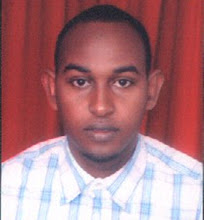
- Abdullahi Jamaa
- Wajir, Northeastern, Kenya
- Abdullahi Jamaa is a Kenyan freelance journalist with reporting experience especially from the devastated Horn of Africa region. You can contact him by emailing: abdullahijamac@yahoo.co.uk