Friday, November 5, 2010
Tales of African lionesses
Where does feminism fit in our narrative of African experience? What is the vision of Africa’s ‘lionesses’- feminist thinkers and doers? Jessica Horn reflects on the opening of the third African Feminist Forum


Thursday, November 4, 2010
The exodus of British and American Somalis to fight in their home country
The BBC’s radio 4, recently aired testimonies of British Somali families missing their young Somali men who have allegedly gone to fight alongside with Al-Shabaab in the insurgency campaign that is getting fierce in Somalia.
But the billion dollar question for now is: are these British and American Somalis justified to fight back in Somalia at this time when innocent Somalis are fed up with the endless conflict.
Somalis do not need more bloodshed. The case of these young men is that of any port in a storm and their families are seemingly seething and sobbing in frustrations.
Somalia’s conflict resolutions have on previous occasions fallen by the wayside, and the introduction of Iraqi and Afghan-style insurgency will not do any good for this God-forsaken country.
These young men are going for the sake of their country, of course we want them to go and bring stability but they need to choose decisively the lesser of evils to avoid degenerating the conflict into a worsening trend.
But the billion dollar question for now is: are these British and American Somalis justified to fight back in Somalia at this time when innocent Somalis are fed up with the endless conflict.
Somalis do not need more bloodshed. The case of these young men is that of any port in a storm and their families are seemingly seething and sobbing in frustrations.
Somalia’s conflict resolutions have on previous occasions fallen by the wayside, and the introduction of Iraqi and Afghan-style insurgency will not do any good for this God-forsaken country.
These young men are going for the sake of their country, of course we want them to go and bring stability but they need to choose decisively the lesser of evils to avoid degenerating the conflict into a worsening trend.
Tuesday, November 2, 2010
Failing Eritrea
Horn of Africa analyst Hogendoorn describes Eritrea as a failing state, he says just a decade ago, Eritrea might reasonably have been described as challenged but stable. Today it is under severe stress, if not yet in full-blown crisis.
Thursday, October 28, 2010
It is a cock-and-bull story to declare the corruption in Somalia the worst in the world. what of Kenya?
The annual Transparency International index about corruption indicated Somalia as the worst country where the practice is widespread. Of course a country without a central government is like a household without both parents.
In the first place when I read the report a few days ago, I could not immediately take a side, but over the last few hours I have been thinking deeply about the corruption index that put Somalia the worst in the world. I said to myself what of Kenya?
Contrary to my understanding of the governments in the Eastern African region, the annual index comes with a faltered survey.
There is a time and place for everything but Kenya should be the worst in corruption in the world than in Somalia, Afghanistan or Myanmar.
May be like a malevolent virus, the prevalence rate of corruption in Somalia may be high. But the incidence rate of grand corruption in Kenya cannot come to any comparison.
The Transparency International’s report is just another cock-and-bull story since it failed to declare Kenya’s grand corruption as the worst in the globe.
In the first place when I read the report a few days ago, I could not immediately take a side, but over the last few hours I have been thinking deeply about the corruption index that put Somalia the worst in the world. I said to myself what of Kenya?
Contrary to my understanding of the governments in the Eastern African region, the annual index comes with a faltered survey.
There is a time and place for everything but Kenya should be the worst in corruption in the world than in Somalia, Afghanistan or Myanmar.
May be like a malevolent virus, the prevalence rate of corruption in Somalia may be high. But the incidence rate of grand corruption in Kenya cannot come to any comparison.
The Transparency International’s report is just another cock-and-bull story since it failed to declare Kenya’s grand corruption as the worst in the globe.
Tuesday, October 26, 2010
Missed opportunities in Somalia
Source: IRIN
Weak leadership and internal divisions have prevented Somalia's Transitional Federal Government (TFG) from exploiting splits among its Islamist insurgent enemies, say analysts.
Al-Shabab and Hisbul-Islam insurgents have, in the past two months, intensified attacks against government forces and allied African Union (AU) troops. Clashes in Mogadishu between 1 and 3 October, for example, left at least 50 people dead and 174 wounded, according to local human rights organizations.
However, divisions within insurgent ranks have increased to a point where rival groups are close to confrontation, sources said, allowing TFG and the AU troops to make some gains.
"They had promised to topple the government by the end of Ramadan, but they did not," one civil society activist working in conflict resolution told IRIN. "They are divided over policy, but the TFG did not or cannot take advantage of this opportunity. It is a sign of how weak the TFG is."
According to the activist, the divisions among insurgents are an opportunity that a shrewd government could exploit to reach out to some insurgent factions. "The TFG has failed on multiple fronts," he said.
The latest major setback for the TFG was the resignation of Prime Minister Omar Abdirashid Ali Sharmarke on 21 September, following a power struggle with President Sheikh Sharif Ahmed.
Other analysts said the key problem was that the TFG itself badly needed to build popular support. "The Somali TFG is very weak and suffers a lack of popular support," said Laura Hammond, a senior lecturer in the department of Development Studies at the School of Oriental and African Studies (SOAS) in London.
According to insiders, a group of Al-Shabab commanders, mainly from south-central Somalia, led by Mukhtar Robow, feel marginalized by Ahmed Godane, his deputy, from the northern Somaliland region and foreign fighters who support him.
The divisions are "about taxes collected and funds used for fighting and the role of foreign fighters", one Somali analyst with ties to the TFG said. Robow and his group are in talks with Sheikh Hassan Dahir Aweys, the leader of Hisbul-Islam, to form a united front.
Robow and his group favour talks to resolve their differences with the TFG and also want aid agencies to greatly expand their area of operations, currently very limited by insecurity, to have access to the needy, the analyst added, noting that a united front between Aweys and the Robow group would create a major headache for Godane and his foreign militants.
"If they [Aweys and Robow] form an alliance, then Al-Shabab [Godane wing] and their foreign friends will have a difficult time finding a refuge in southern Somalia," he said.
He suggested the divisions within Al-Shabab were the most important development in Somalia since the end of 2006, when, with the help of Ethiopian troops, the Union of Islamic Courts government was toppled.
The divisions should be exploited for the benefit of Somalis, he said, going on to describe Robow and his group as "nationalists in Islamist garb" with whom the TFG should find ways of opening dialogue.
"I hope whoever is the next prime minister will have the courage and freedom to enter into a dialogue with the group," he added. "It is the only way forward."
The wrangling within insurgent ranks and further weakening of the TFG come at a time when the international community has expressed growing interest in resolving the Somali question. UN Security Council members, in Africa last week, mulled the idea of increasing support to African peacekeeping efforts.
On 8 October, the AU appointed former Ghanaian president Jerry Rawlings as High Representative, to "work towards the successful conclusion of the peace and reconciliation process in Somalia". He is expected to strengthen the AU Mission, broaden the political base of transitional institutions and build the capacity of the TFG.
But analysts said recent international efforts had yet to have a significant impact. "The international community has to first learn the lessons from their blunder in 2006 when a homegrown solution was aborted by the international community at a cost of tens of thousands of dead Somali civilians, and nearly two million either displaced or in refugee camps," a political analyst said.
"Why not attempt to work with the Islamists? The alternative is to fight a long-term insurgency and [end up with] clan-based 'Bantustans'."
Weinstein added: "The international coalition of the US and UN has no domestic partner and holds no cards, yet they have the money bags and won't leave the situation alone, thereby preventing any moves for fusion within Somalia."
According to Hammond, dealing with Somalia primarily in terms of its terrorist threat was unlikely to be constructive, while the crackdown on financial flows and travel to the country by Somalis had been severe.
"People who want to invest in relief and development inside the country, even in peace-building, are afraid to do so," she added. "They fear that if they engage, they will be accused of supporting the insurgents. This will have a very negative impact on Somalia, a country that relies on its links to the diaspora for its lifeline."
An estimated two million Somalis need humanitarian assistance, according to the UN. Some 1.4 million others are displaced inside the country, while more than 600,000 are refugees in neighbouring countries. Since January, the three main hospitals in Mogadishu have recorded over 500 deaths resulting from war-wounds.
Weak leadership and internal divisions have prevented Somalia's Transitional Federal Government (TFG) from exploiting splits among its Islamist insurgent enemies, say analysts.
Al-Shabab and Hisbul-Islam insurgents have, in the past two months, intensified attacks against government forces and allied African Union (AU) troops. Clashes in Mogadishu between 1 and 3 October, for example, left at least 50 people dead and 174 wounded, according to local human rights organizations.
However, divisions within insurgent ranks have increased to a point where rival groups are close to confrontation, sources said, allowing TFG and the AU troops to make some gains.
"They had promised to topple the government by the end of Ramadan, but they did not," one civil society activist working in conflict resolution told IRIN. "They are divided over policy, but the TFG did not or cannot take advantage of this opportunity. It is a sign of how weak the TFG is."
According to the activist, the divisions among insurgents are an opportunity that a shrewd government could exploit to reach out to some insurgent factions. "The TFG has failed on multiple fronts," he said.
The latest major setback for the TFG was the resignation of Prime Minister Omar Abdirashid Ali Sharmarke on 21 September, following a power struggle with President Sheikh Sharif Ahmed.
Other analysts said the key problem was that the TFG itself badly needed to build popular support. "The Somali TFG is very weak and suffers a lack of popular support," said Laura Hammond, a senior lecturer in the department of Development Studies at the School of Oriental and African Studies (SOAS) in London.
According to insiders, a group of Al-Shabab commanders, mainly from south-central Somalia, led by Mukhtar Robow, feel marginalized by Ahmed Godane, his deputy, from the northern Somaliland region and foreign fighters who support him.
The divisions are "about taxes collected and funds used for fighting and the role of foreign fighters", one Somali analyst with ties to the TFG said. Robow and his group are in talks with Sheikh Hassan Dahir Aweys, the leader of Hisbul-Islam, to form a united front.
Robow and his group favour talks to resolve their differences with the TFG and also want aid agencies to greatly expand their area of operations, currently very limited by insecurity, to have access to the needy, the analyst added, noting that a united front between Aweys and the Robow group would create a major headache for Godane and his foreign militants.
"If they [Aweys and Robow] form an alliance, then Al-Shabab [Godane wing] and their foreign friends will have a difficult time finding a refuge in southern Somalia," he said.
He suggested the divisions within Al-Shabab were the most important development in Somalia since the end of 2006, when, with the help of Ethiopian troops, the Union of Islamic Courts government was toppled.
The divisions should be exploited for the benefit of Somalis, he said, going on to describe Robow and his group as "nationalists in Islamist garb" with whom the TFG should find ways of opening dialogue.
"I hope whoever is the next prime minister will have the courage and freedom to enter into a dialogue with the group," he added. "It is the only way forward."
The wrangling within insurgent ranks and further weakening of the TFG come at a time when the international community has expressed growing interest in resolving the Somali question. UN Security Council members, in Africa last week, mulled the idea of increasing support to African peacekeeping efforts.
On 8 October, the AU appointed former Ghanaian president Jerry Rawlings as High Representative, to "work towards the successful conclusion of the peace and reconciliation process in Somalia". He is expected to strengthen the AU Mission, broaden the political base of transitional institutions and build the capacity of the TFG.
But analysts said recent international efforts had yet to have a significant impact. "The international community has to first learn the lessons from their blunder in 2006 when a homegrown solution was aborted by the international community at a cost of tens of thousands of dead Somali civilians, and nearly two million either displaced or in refugee camps," a political analyst said.
"Why not attempt to work with the Islamists? The alternative is to fight a long-term insurgency and [end up with] clan-based 'Bantustans'."
Weinstein added: "The international coalition of the US and UN has no domestic partner and holds no cards, yet they have the money bags and won't leave the situation alone, thereby preventing any moves for fusion within Somalia."
According to Hammond, dealing with Somalia primarily in terms of its terrorist threat was unlikely to be constructive, while the crackdown on financial flows and travel to the country by Somalis had been severe.
"People who want to invest in relief and development inside the country, even in peace-building, are afraid to do so," she added. "They fear that if they engage, they will be accused of supporting the insurgents. This will have a very negative impact on Somalia, a country that relies on its links to the diaspora for its lifeline."
An estimated two million Somalis need humanitarian assistance, according to the UN. Some 1.4 million others are displaced inside the country, while more than 600,000 are refugees in neighbouring countries. Since January, the three main hospitals in Mogadishu have recorded over 500 deaths resulting from war-wounds.
Tuesday, October 19, 2010
Kenya abandoned Renditioned Muslims
Do you know how the families of those Muslims renditioned from Kenya to Uganda say about the whole issue? From their own mouths they are terrorized with their broken hearts seething in an endless agony.
A mother of four told me “Terrorists are those who have renditioned our husbands and made our young children fatherless”
Their own government has abandoned them, just as they struggle to worry about their family members suffering in Yoweri Museveni’s cells, Kibaki and Raila have remained tight-lipped over the gross violations of human rights even as we implement a new constitution that allows for a complete respect of human rights.
After my encounter with the families in Nairobi, I recently did this story –Muslim Renditions Taint Kenya’s Image-about their trouble and vexation.
A mother of four told me “Terrorists are those who have renditioned our husbands and made our young children fatherless”
Their own government has abandoned them, just as they struggle to worry about their family members suffering in Yoweri Museveni’s cells, Kibaki and Raila have remained tight-lipped over the gross violations of human rights even as we implement a new constitution that allows for a complete respect of human rights.
After my encounter with the families in Nairobi, I recently did this story –Muslim Renditions Taint Kenya’s Image-about their trouble and vexation.
Saturday, October 16, 2010
Somalia’s One-eyed leaders
The need for practical good leadership in Somalia is so apparent; of course it is because of lack it that the country is in an endless turmoil for more than two decades now.
Poor Somalis have always choked back their seething grieves and rages to get the kind of men and women who can lead them well into the road to peace and stability, but always in vain.
A leader will never find his way unless you lead him by the noose, but the leading classes in Somali have never given that opportunity to their subject, their desperate people, and have since lead the country from bad to worse.
The powerful political classes in Somalia, whether they are what I call ‘cooperate’ or clan leaders have only known which side of the bread is buttered.
They seem to lay their plans depending on what gains they can get without worrying about the trouble and vexation of their helpless and poor people. It doesn’t matter to them whether one person is dying or a thousand people are massacred.
Somalia is not the country of the blind, there are many good capable men and women who can really make their people proud, but the real problem is that one-eyed men always want to be the kings in this failed state.
Some people say that Somalia is a country where everybody wants to be the president, but I say Somalia is a country like any other in the third world where visionary leadership is absent to fast track reconciliation process.
Over the last two devastating decades an estimated one million Somalis have been killed, many more million of others have been displaced. Far more awesome the country is degenerating into a worsening trend every passing day.
From every end: much from within Somalia and from the international community, the blame game concerning the Horn of Africa nation continues unabated , and in the process we only see more deaths, displacements and destructions.
In Somalia there is really a total crisis of leadership, the failure of finding the right honorable prime minister in the last three transitional governments is a testimony to the boring patterns of bad-politics in this poor nation.
From the administration of both the immediate former president Abdullahi Yussuf to the current regime of Sheikh Sharif, several prime ministers have left the government with their tails between their legs.
There is all the reason to believe that the people of Somalia always find themselves backing the wrong horse.
The catalogue of resignation of about five prime ministers over the past a half a decade signals how the lagging lords in Somalia is hitting a dead-end leaving behind little hope and aspiration for new comers into the power nod of the country.
From the vacation of Ali Mohamed Gedi who has been the country’s premier from 2004 to 2007, to the most recent victim Ali Sharmake, we have only known to see an array of resignation after resignation casting doubt on whether Somalia can ever produce an able-bodied prime minister and president.
Not mention the period of president Abdulqasim, first resignation started with Mr. Gedi in December 2007 after along standing difference with President Abdullathi Yussuf. Following the resignation of Gedi, Premier Nur Hassan rose to the helm but later fought decisively with his appointee only to result in the downfall of the entire interim authory forcing president Yusuf to vacate office consequently.
The regime of president Sharif has inherited the same unyielding appointments that only wasted the timeframe to enhance institutional strengthening of the country. The reason why many premiers left their job has been lack of cooperation between the executive arms.
Now the same game goes on and on, president Sharif follows the same path his two predecessors have failed to quantify accurately for Somalia’s hard-to-crack peace process.
As time and tide wait for no man, we only anticipate seeing an expiry of the transitional government come Augst2011 without any significant achievement for the people of Somalia.
This kind of leadership in the successive interim governments is undoubtedly not a solution for Somalis; it rather shows the edifice of a complicated peace process that will ever remain hanging in the balance.
The ever-stale political quagmire nurtured a not-promising situation, if the current poor leadership in the country continues to rule, the people in this God-forsaken nation will only have a chance in hell.
For the people of Somalia it is now time to take the bull by the horns, there is always more than one way to skin a cat, there is no need to waste time on the same process again and again that resulted total failures.
The appointment of the new Prime Minister Mohamed Abdullahi will never make difference in as long as the same failures that trapped his predecessors still remain. Mr. Abdullahi has been praised from Cape to Cairo but he should know that he is not a sacred cow, and that he will certainly resign one day.
His appointment comes with nothing big, it is the same Somalia that he has left a decade ago, nothing has changed really for you premier.
I am sure those who have appointed you have misled your integrity as a scholar and by accepting the offer you have certainly thrown yourself into the lion’s den.
Now it’s your time and turn, but remember everyman is the architect of his own fortune. The people of Somalia cannot remain ruined by worthless leaders who have no moral fortitude to act decisively and in the best interest of Somalis.
Subscribe to:
Posts (Atom)
About the author of Sobbing Somali
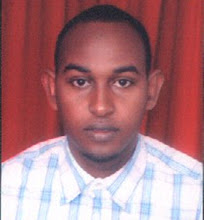
- Abdullahi Jamaa
- Wajir, Northeastern, Kenya
- Abdullahi Jamaa is a Kenyan freelance journalist with reporting experience especially from the devastated Horn of Africa region. You can contact him by emailing: abdullahijamac@yahoo.co.uk